

Transferable Skills in Women


Some knowledge does not announce itself loudly.
It arrives quietly, settles into routine, and over time becomes the backbone of livelihoods.
Housekeeping is one of those skills.
When Careen spent time with the women of Kirepwe, she was not simply teaching cleaning techniques or hotel standards.
She was sharing lived experience — the kind earned through years of working in spaces where consistency, attention to detail, and trust matter deeply.
Fixing the Malta Corner

Her approach was practical and respectful, rooted in the understanding that housekeeping is not “small work,” but skilled labour keeping entire hospitality ecosystems running.
In Watamu, housekeeping is not optional. It is a key employable skill. Hotels, Airbnbs, private homes, lodges, and retreats rely on trained housekeepers to maintain standards, guest satisfaction, and safety. For many women along the coast, it is one of the most accessible pathways into stable income — especially when done professionally.
What made Careen’s session meaningful was not only what she taught, but how. She spoke openly about expectations, discipline, client relationships, and pride in one’s work. The women asked questions freely. They shared their own experiences, and laughed.
The Outcome of The Housekeeping Exchange
Knowledge moved both ways. What emerged was confidence — the kind that comes from understanding your value in a system that often overlooks it.
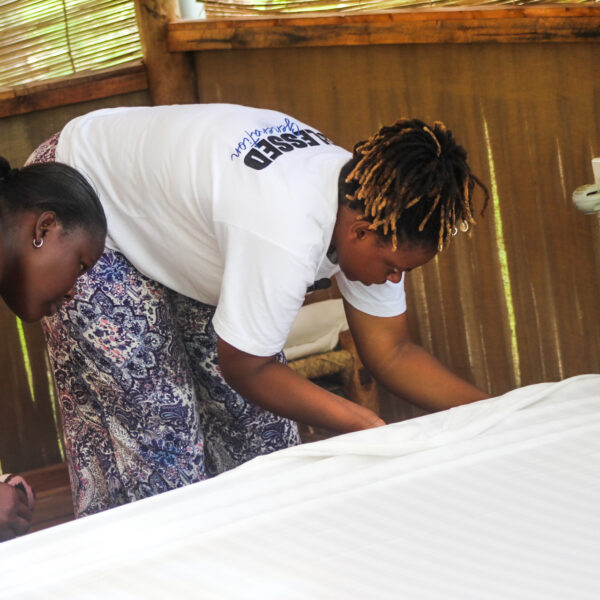
This moment also sits within a larger shift. With the opening of the new technical college in Watamu, housekeeping is now being formalised as a course of study.
This matters. It signals recognition — that skills traditionally passed down informally are worthy of certification, structure, and investment. It opens doors for women to move from casual labour to trained professionals, with clearer career paths and bargaining power.
Careen’s contribution to Kirepwe women was a reminder that development does not always look like big interventions. Sometimes it looks like one woman sharing what she knows, honestly and generously, with others who are ready to learn. It looks like skills meeting opportunity. It looks like dignity in work.
As storytelling continues around Kirepwe, these are the moments worth documenting — where knowledge is exchanged, confidence is built, and futures quietly shift direction.
See the full video on Instagram
By Kilifi Culture